Children’s booksFrom the archive
A folded booklet on Surah Al-Ghashiyah
After we learned Surah Al-Ghashiyah together, Nurin folded yellow paper into a booklet and filled it with what the surah meant to her. She added Surah Al-A'la, a page on what a da'i is and a mirror-writing quiz.
After we learned Surah Al-Ghashiyah together, Nurin, our second child, folded a sheet of yellow paper into a little booklet. On each page she drew and wrote what the surah meant to her, at her level. It is a makeshift book, folded and drawn by hand, and it sits between several things we do: doodling the Quran, investigating it, and running programmes.
What is inside
The cover has the surah's name in big outlined letters and in Arabic, with a vine growing up the side. Inside, she counted the verses and linked the surah to two others she knew that also talk about the Day of Judgement, Al-Zalzalah and Al-Qariah. Then she drew. One page is full of small scenes and ends with "WILL YOU SURVIVE!" The facing page, split down the middle by a jagged line, ends with "WHO DO YOU THINK YOU ARE?"
Next she turned to Surah Al-A'la, with a cover and a page of its own. A page asks "What's a DA'I" and answers: "Dài means to invite people to the truth". The last page is a "Mini Quiz" for whoever reads the booklet. She wrote the answers in mirror writing, so you need a mirror, or some patience, to check them. At the bottom she wrote: "WHAT HAVE YOU LEARNED?"
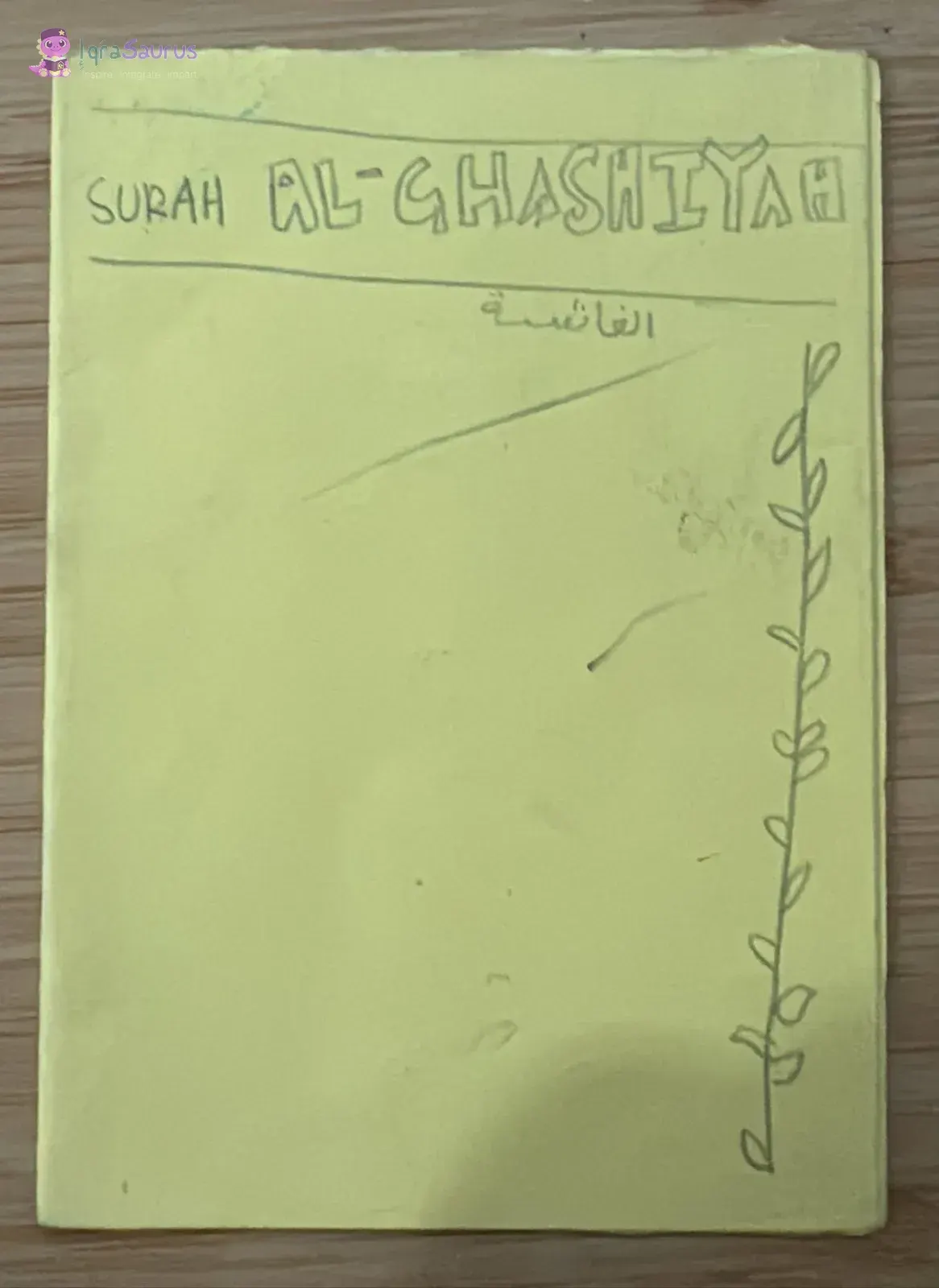
SURAH AL-GHASHIYAH
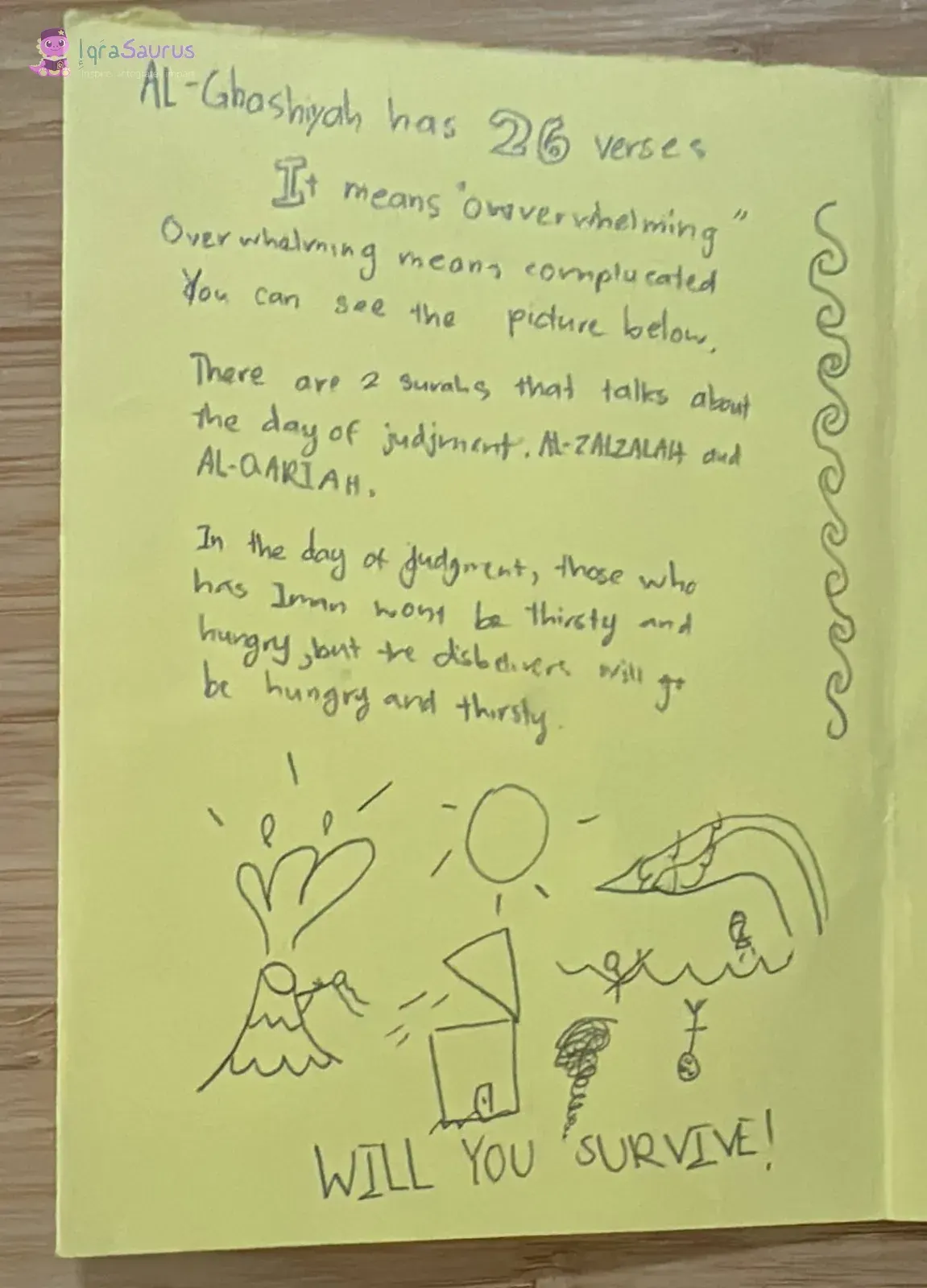
AL-Ghashiyah has 26 verses It means "overwhelming" Overwhalming means complucated You can see the picture below. There are 2 surahs that talks about the day of judjment. AL-ZALZALAH and AL-QARIAH. In the day of judgment, those who has Iman wont be thirsty and hungry, but the disbelivers will go be hungry and thirsty. / WILL YOU SURVIVE!
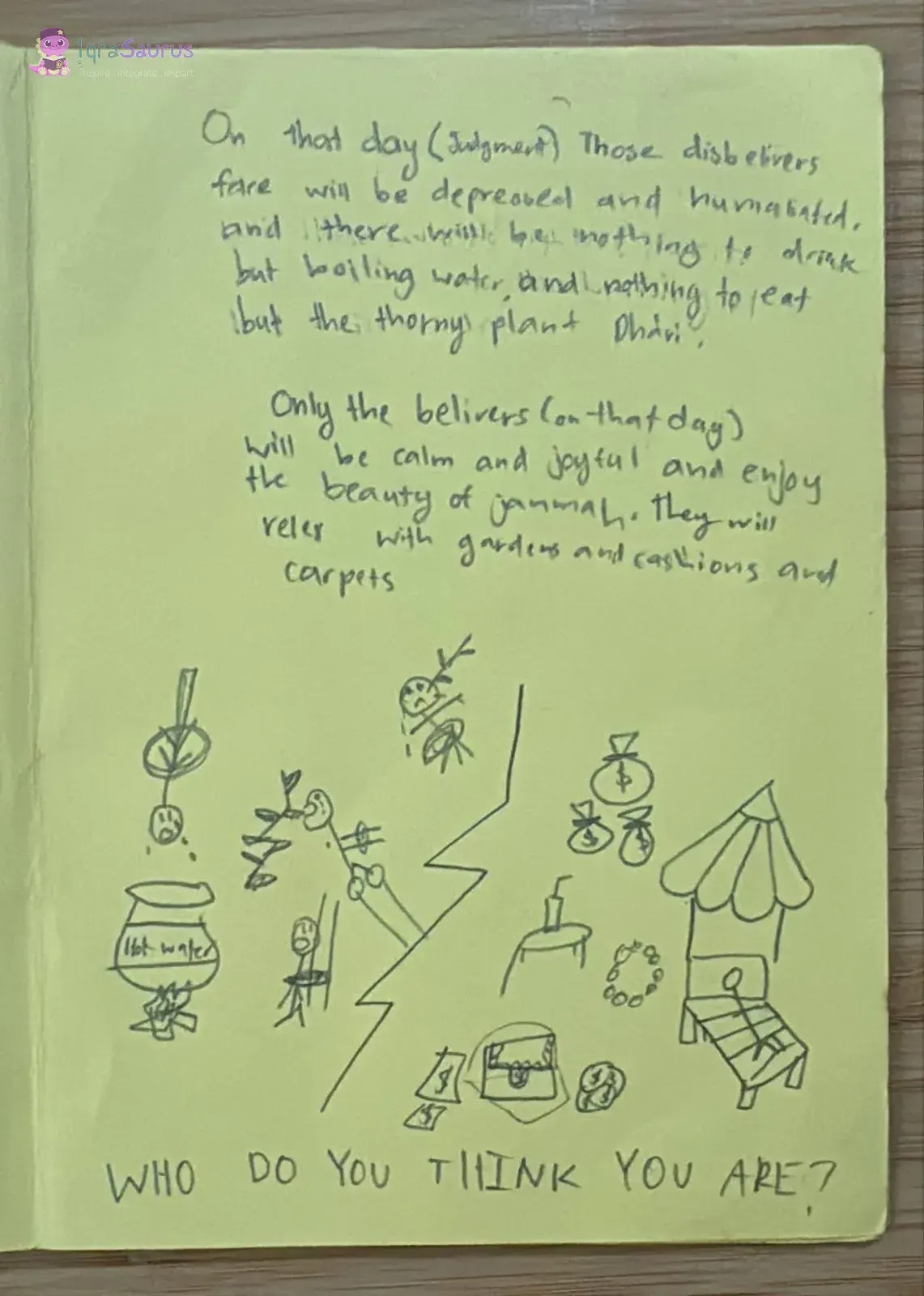
On that day (Judgment) Those disbelivers fare will be depreased and humaliated, and there will be nothing to drink but boiling water, and nothing to eat but the thorny plant Dhari'. Only the belivers (on that day) will be calm and joyful and enjoy the beauty of jannah. They will relex with gardens and cashions and carpets / Hot water / WHO DO YOU THINK YOU ARE?
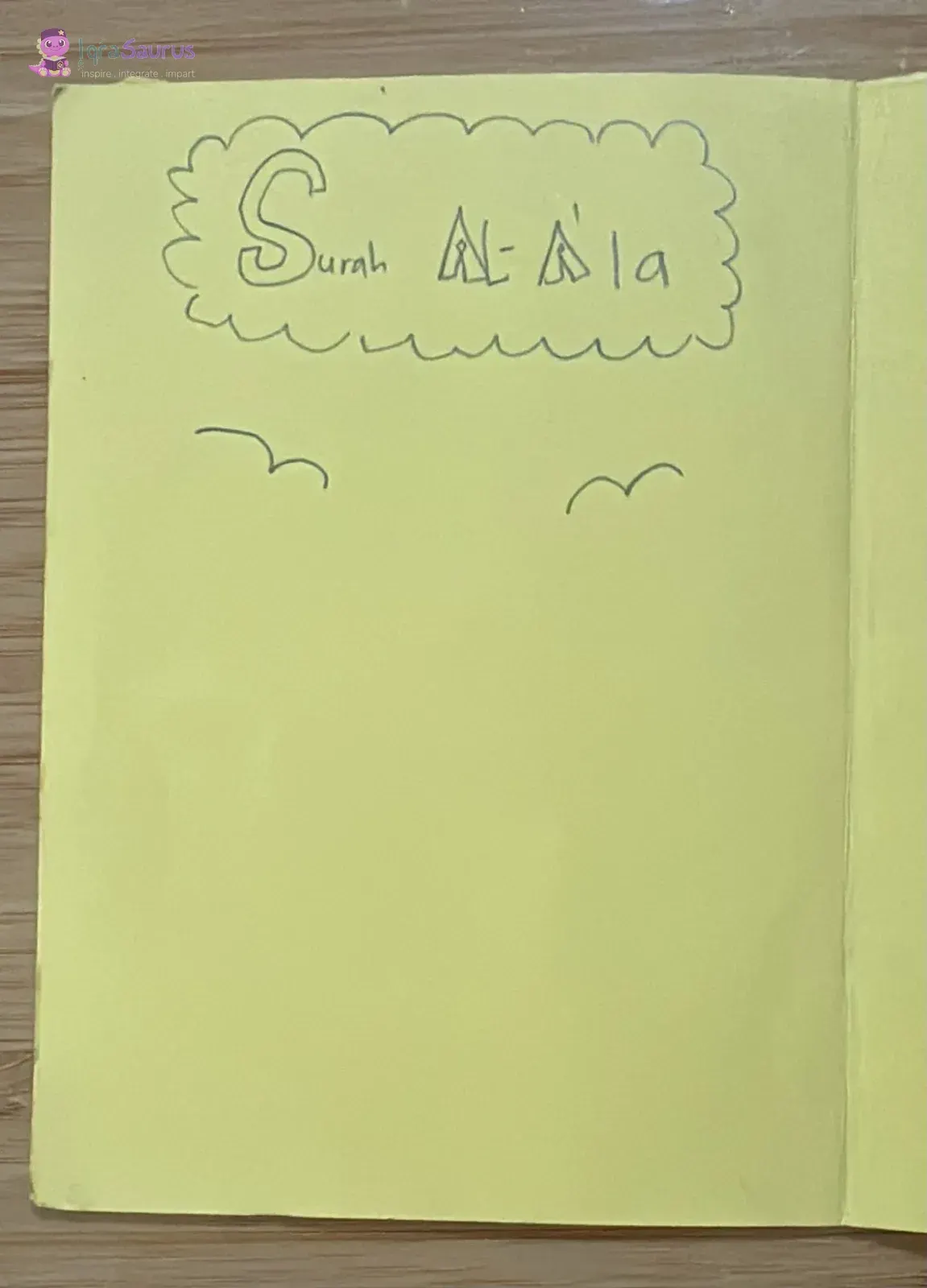
Surah Al-A'la
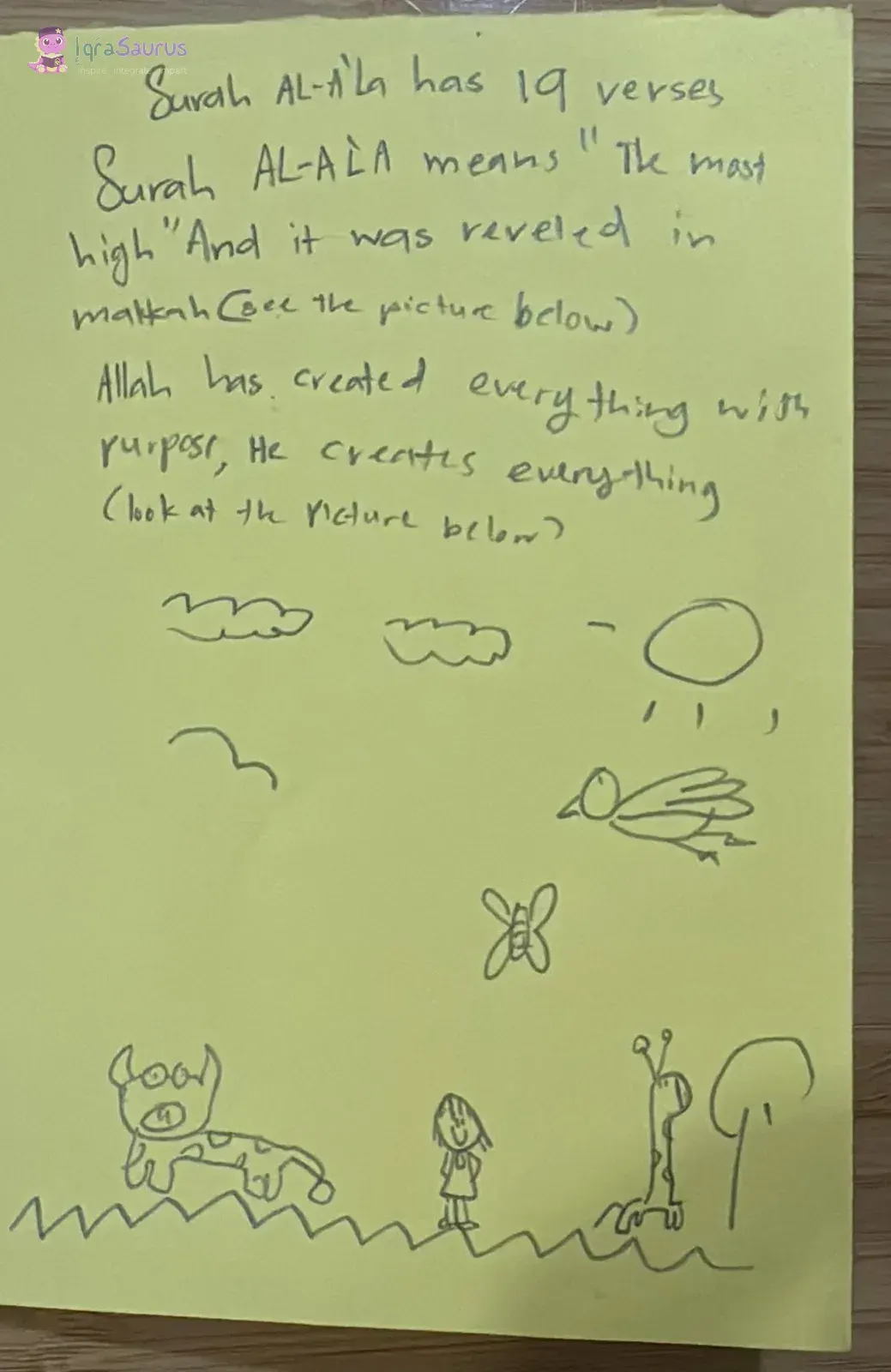
Surah AL-A'La has 19 verses Surah AL-A'LA means "The most high" And it was reveled in makkah (see the picture below) Allah has created everything with purpose, He creates everything (look at the picture below)
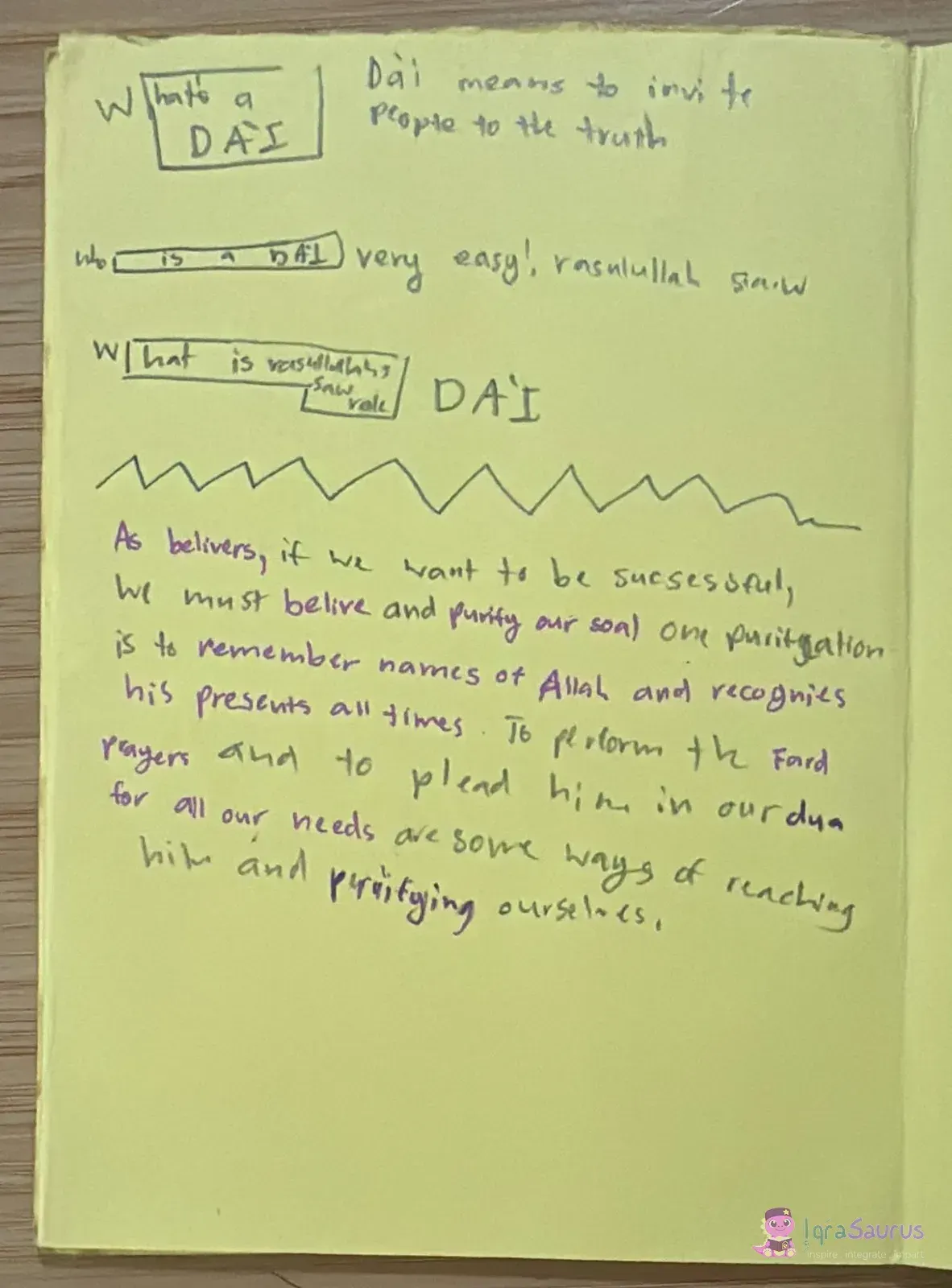
What's a DA'I / Da'i means to invite people to the truth / Who is a DA'I very easy!, rasulullah s.a.w / What is rasulullah's s.a.w role DA'I / As belivers, if we want to be sucsesoful, we must belive and purify our soal one purif[?]ation is to remember names of Allah and recognies his presents all times. To perform the Fard prayers and to plead him in our dua for all our needs are some ways of reaching him and purifying ourselves.
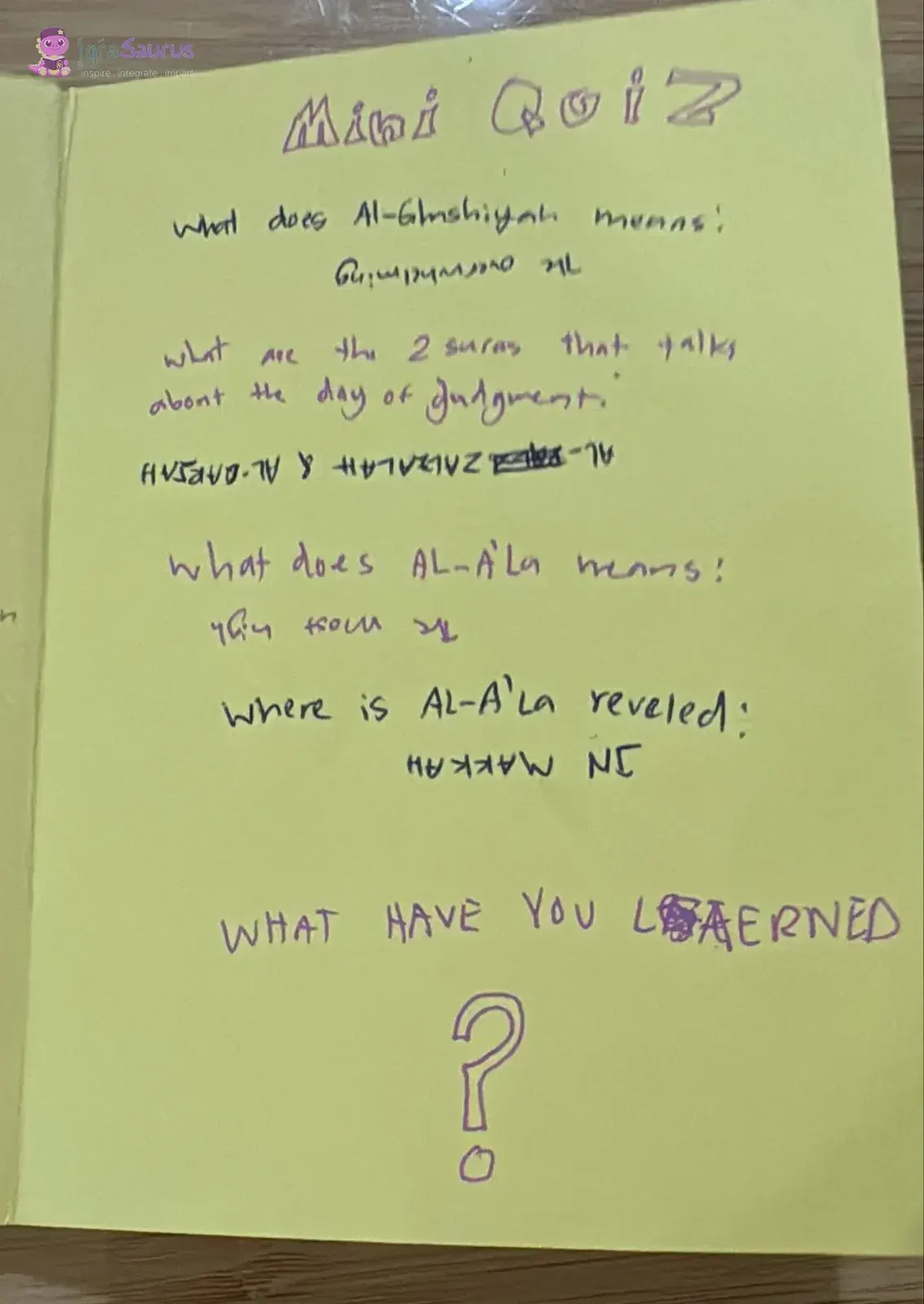
Mini Quiz / what does Al-Ghashiyah means: / The overwhelming / what are the 2 suras that talks about the day of judgment: / AL-ZALZALAH & AL-QARIAH / what does AL-A'La means: / The most high / where is AL-A'La reveled: / IN MAKKAH / WHAT HAVE YOU LEARNED / ?
A child's reflection, not a translation
Everything in this booklet is Nurin's own words and drawings. It is a child's reflection on what she had learned, not a translation of the surah, and we show it that way. A child who draws a verse has to think about it first. Then, with a quiz at the end, she turned her thinking into something to share. That is Impart, the last step of our 4-I, done by a child for other children.