Children’s workDari arkib
Al-Fatihah, in scrapbook cards and a Bookcamp workbook
Scrapbook verse cards made at one of our early Bookcamps, and the Al Fatihah Bookcamp workbook as Qoyis filled it in.
Al-Fatihah is a surah we keep coming back to, in Bookcamps, in Quran Investigators and in our other programmes. Here are two kinds of work it has produced: scrapbook cards and a workbook filled in by a child.
Scrapbook cards
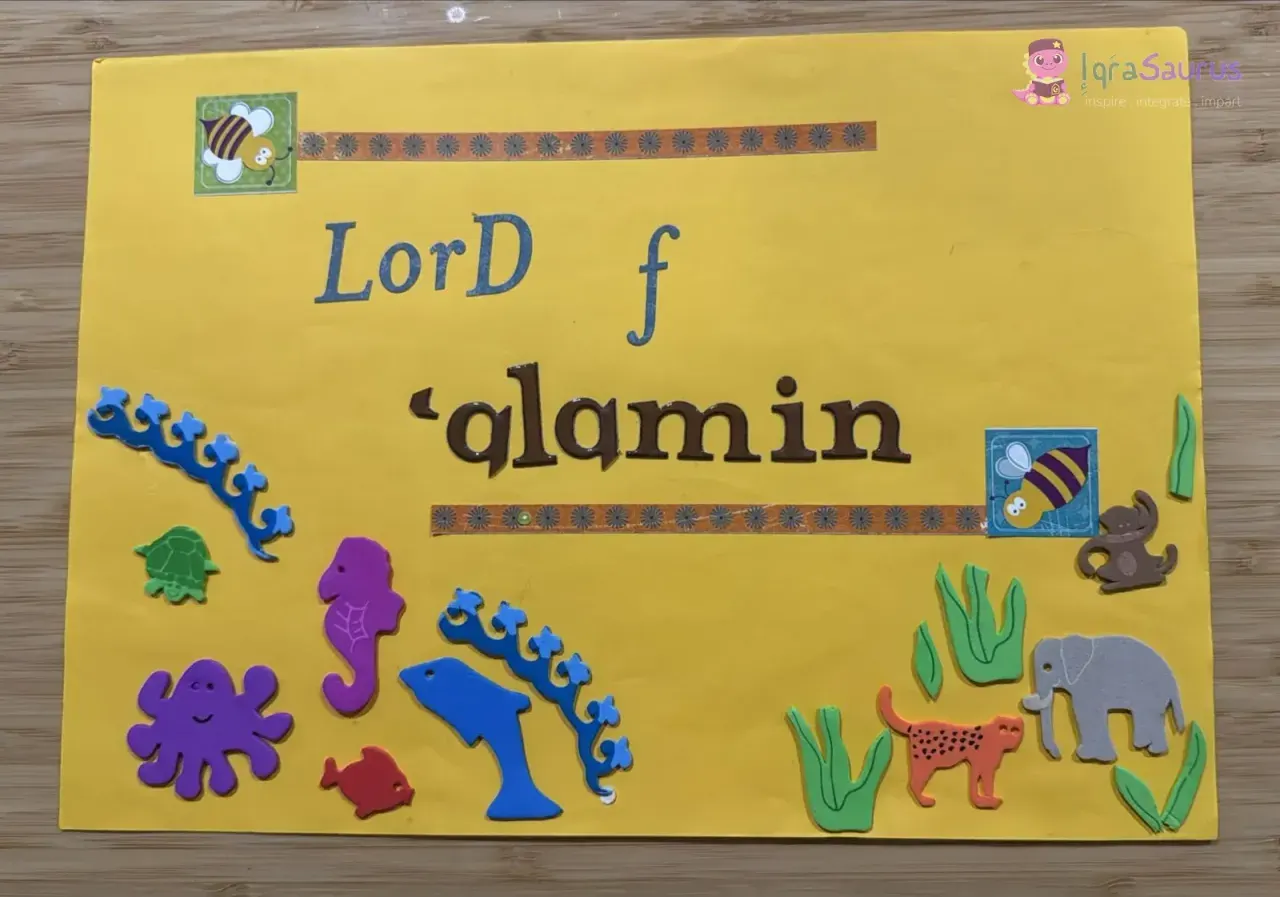
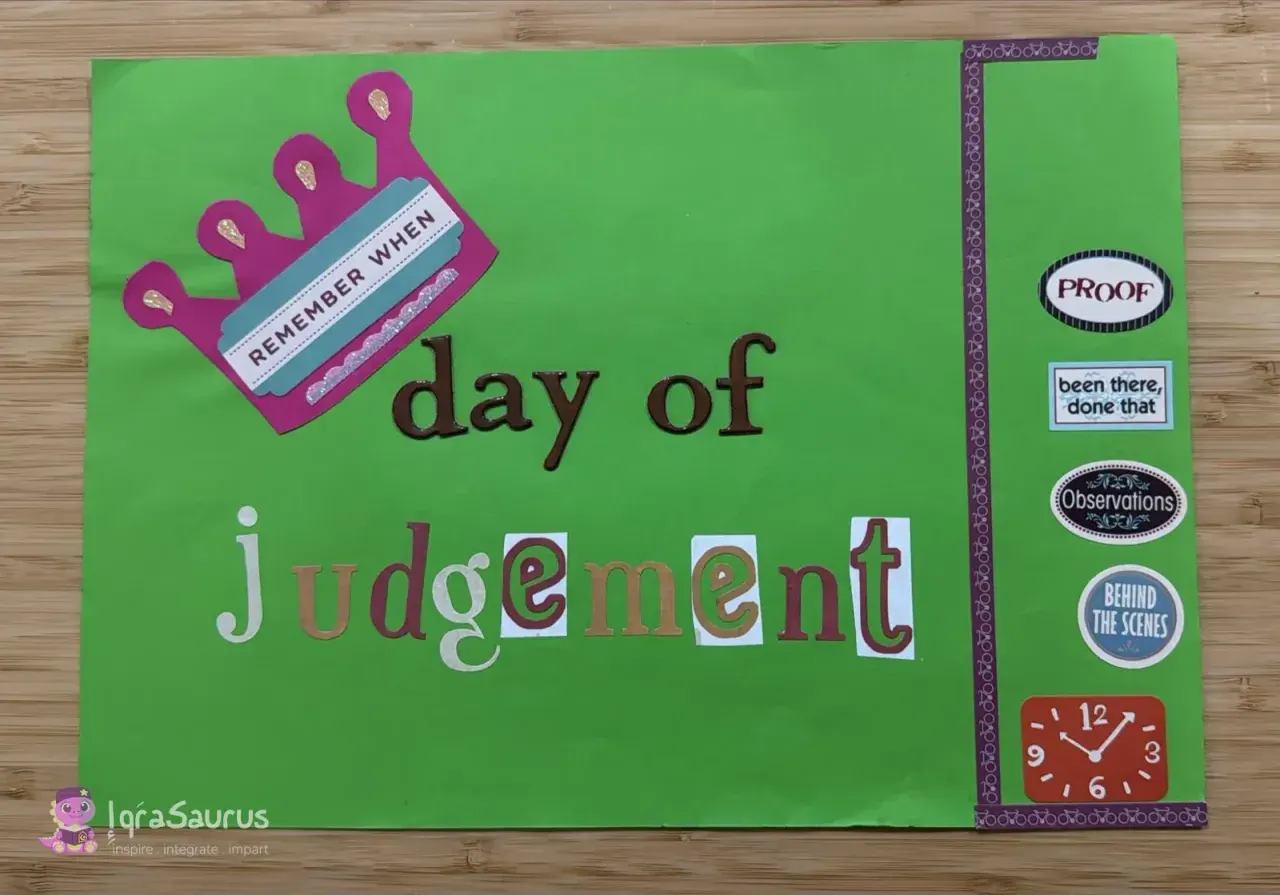
When our children were still young, we started running surah Bookcamps, and Al-Fatihah was one of them. At one Bookcamp the verses became a set of A4 card collages, one for each idea in the surah, made with cut-out and sticker letters, foam animals, washi tape and scrapbook stickers. The words on the cards are the maker's own short paraphrase, not a translation.
The card for the second verse is covered in foam sea creatures and land animals.
The Day of Judgement card has a paper crown, a red clock and a "Remember when" label.
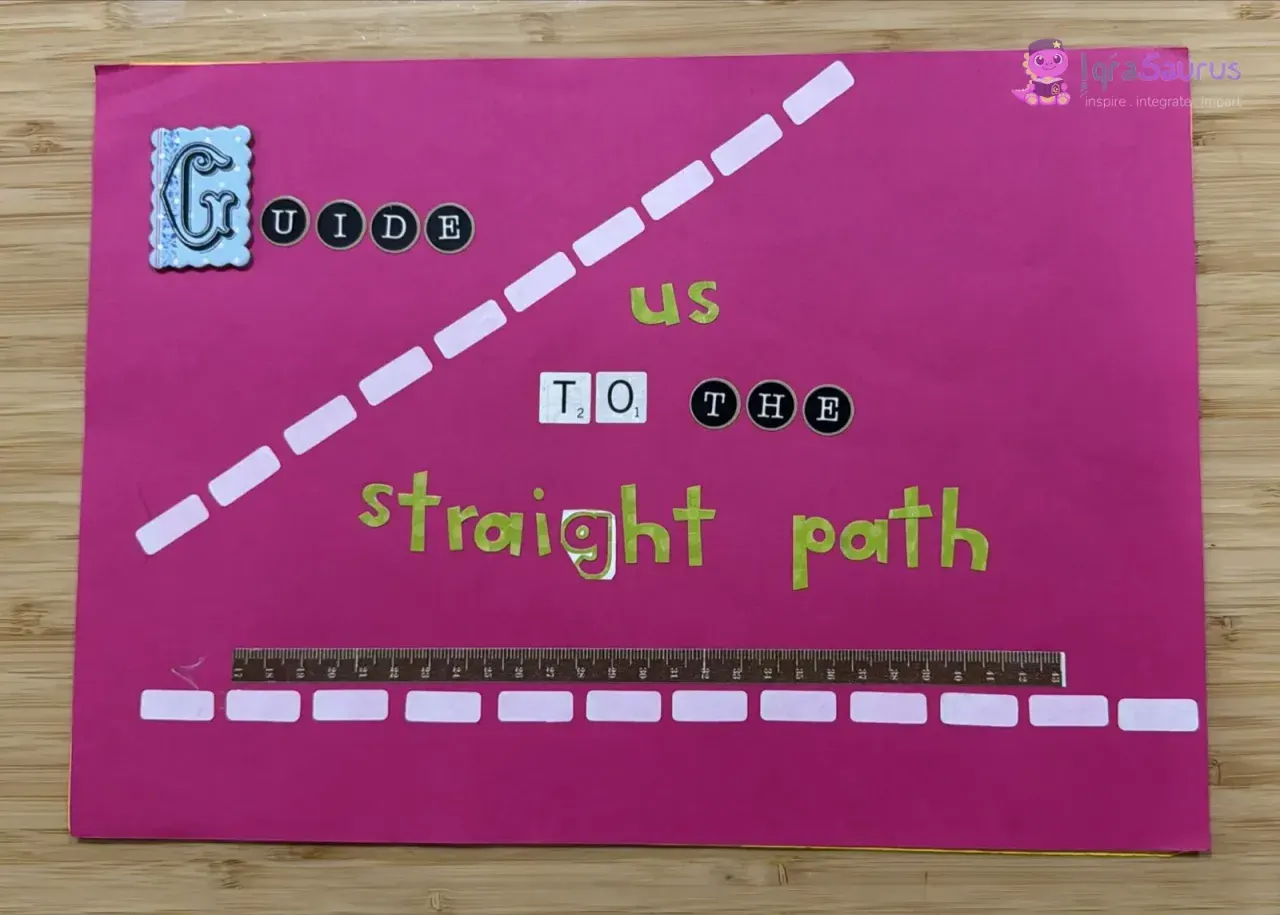
The card for the straight path has a ruler and a dashed white road running across it.
Qoyis's workbook
Our Al Fatihah Bookcamp workbook went through many rounds. We test our materials quickly, on the ground, in different formats and across different programmes, until we reach a format children like. This copy was filled in by Qoyis when he was small, around 2019 to 2021. It is set out as seven stations.
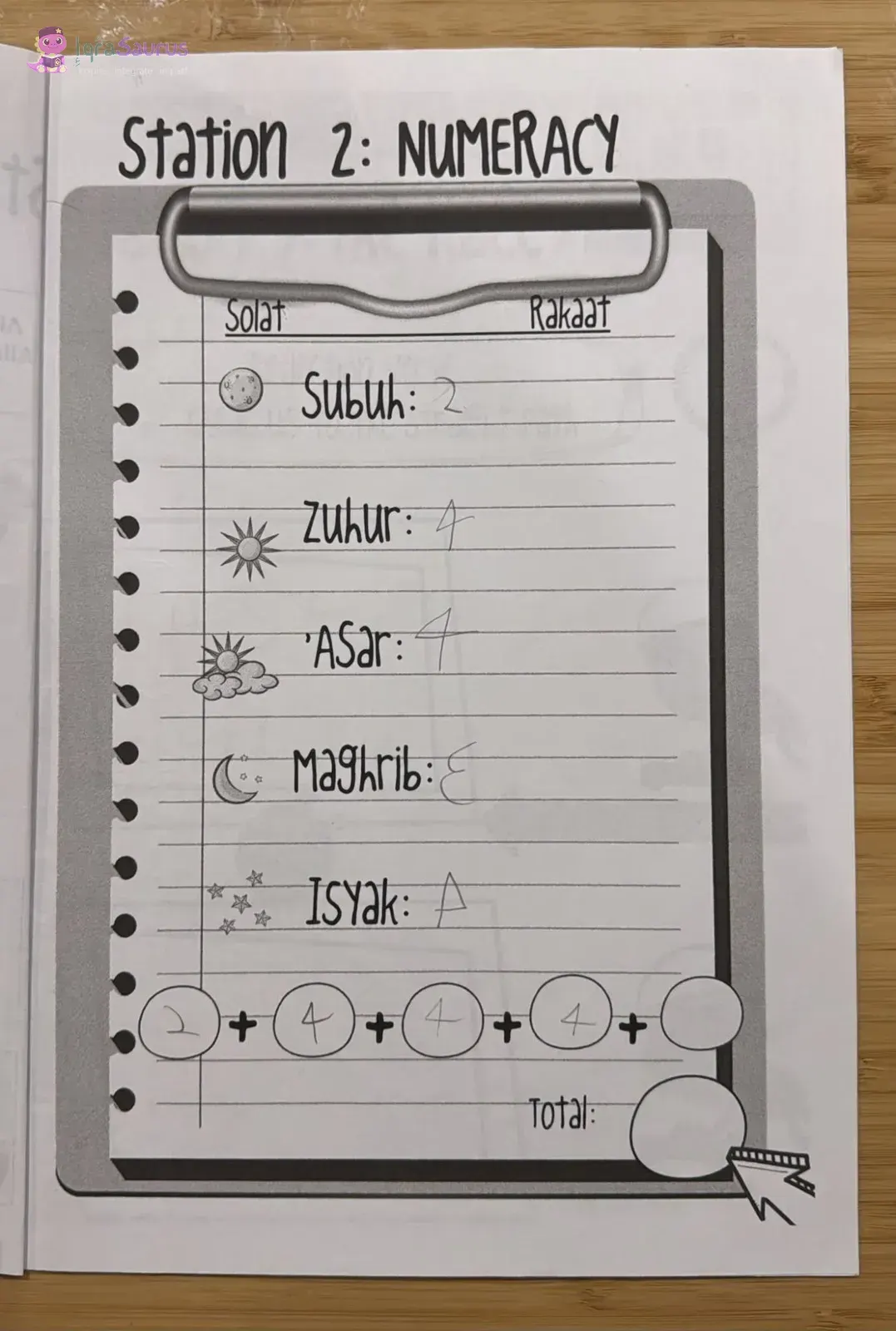
At Station 2, Numeracy, he wrote the number of rakaat beside each of the five daily prayers.
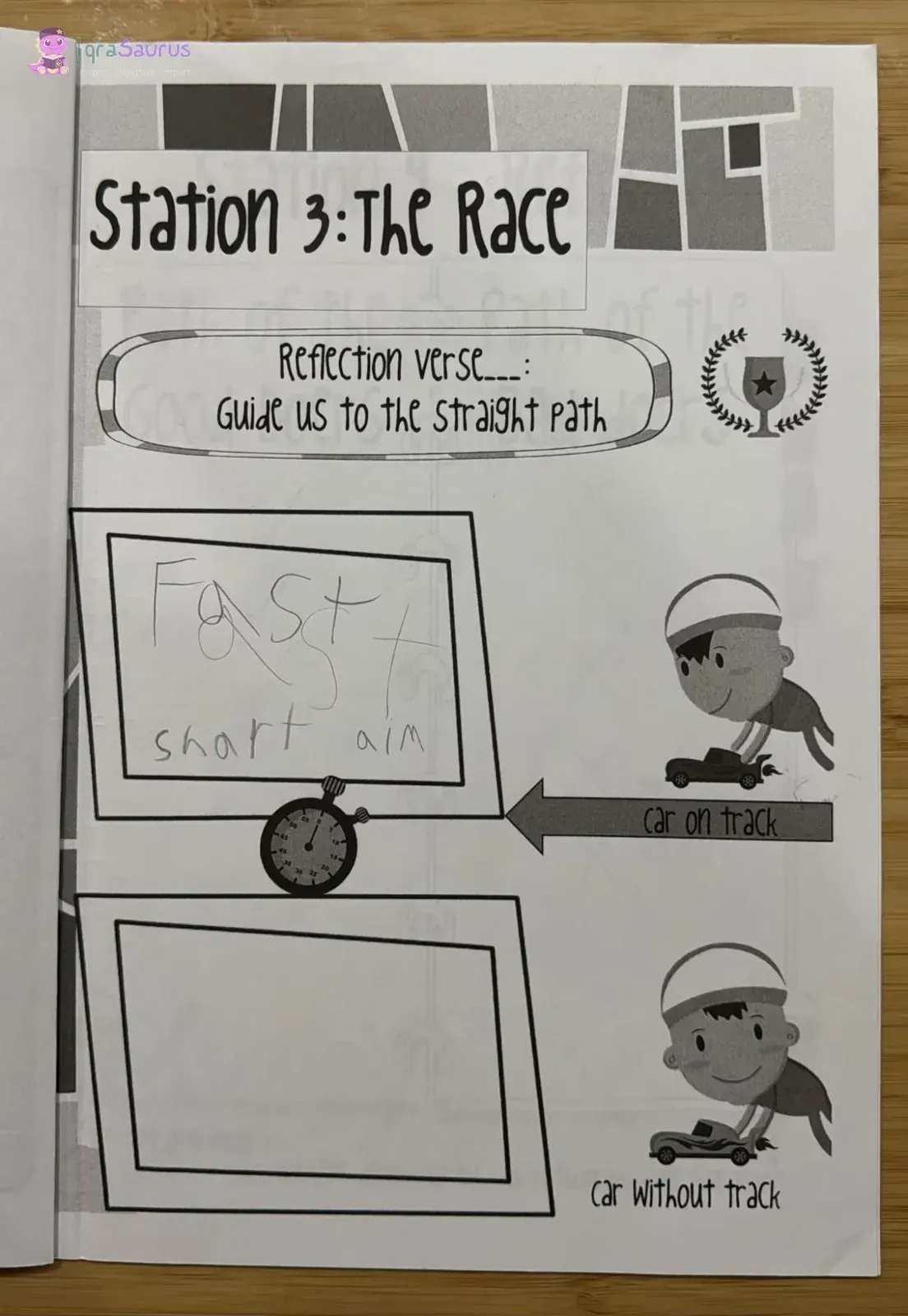
At Station 3, The Race, he wrote "Fast", "smart" and "aim".
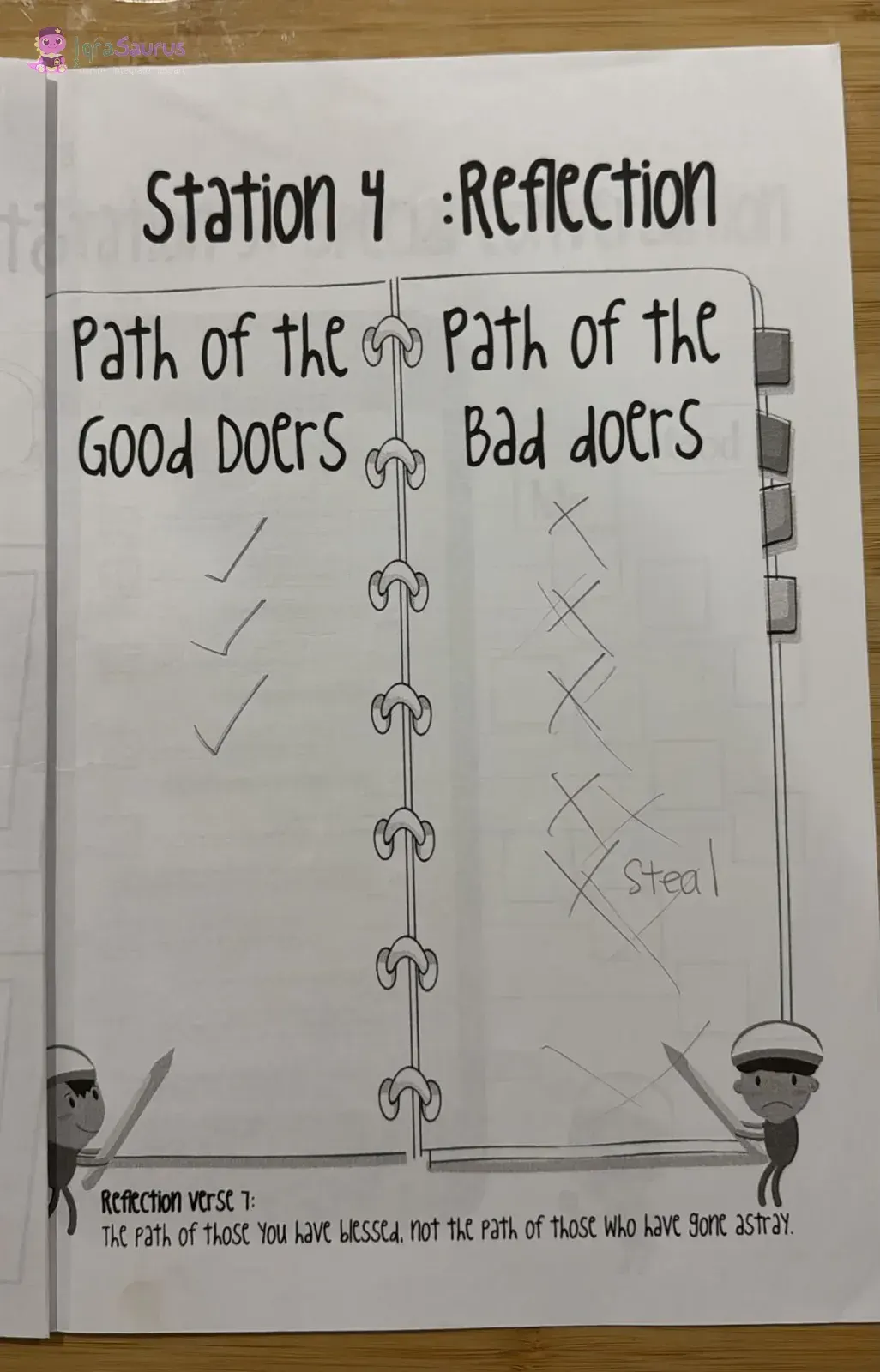
At Station 4, Reflection, he ticked the path of the good doers and crossed out the path of the bad doers, writing "Steal" among the crosses.
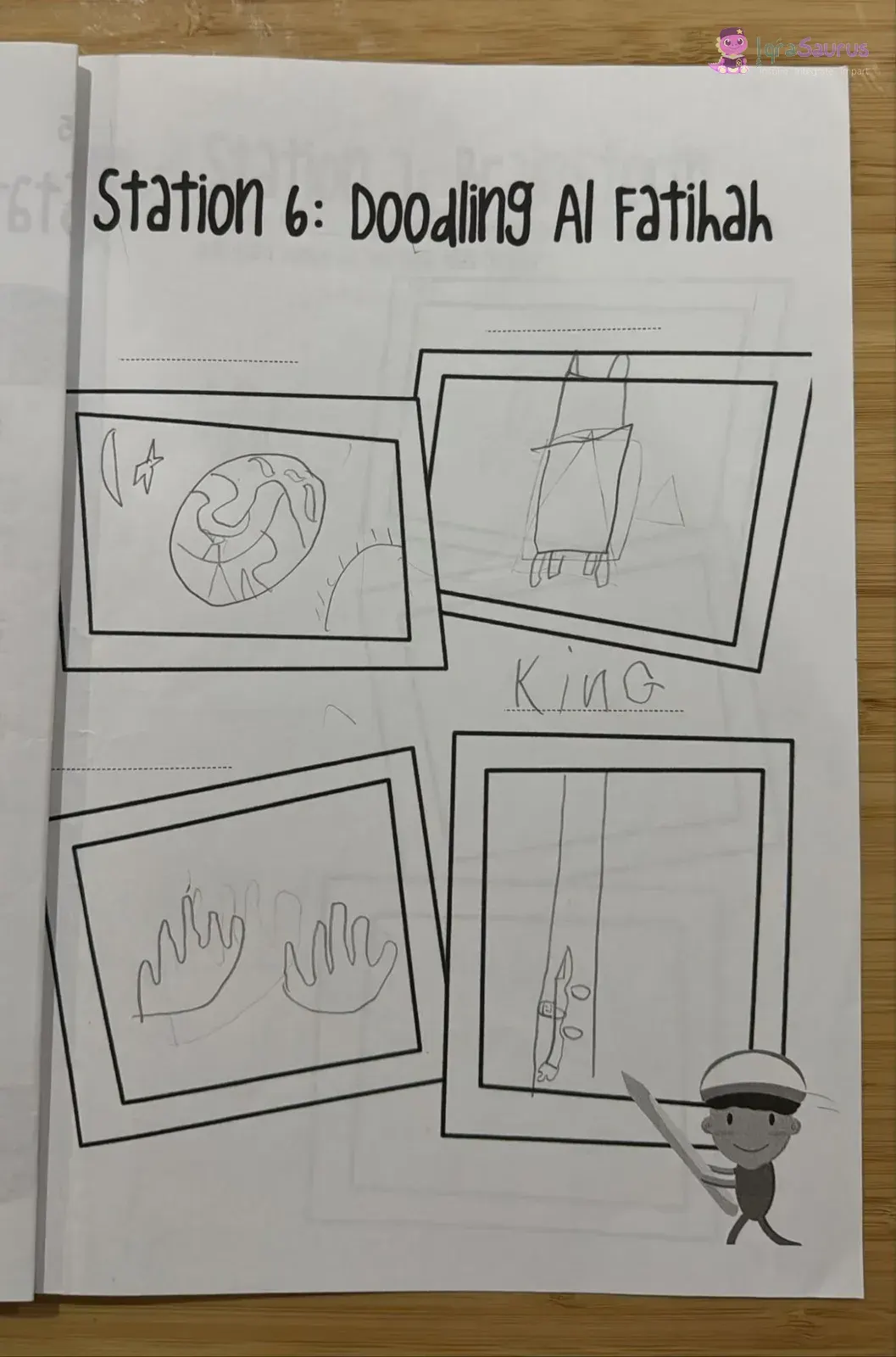
At Station 6 he doodled Al-Fatihah in four frames: the earth with the moon and a star, a drawing he labelled "King", two open hands, and a long straight road.
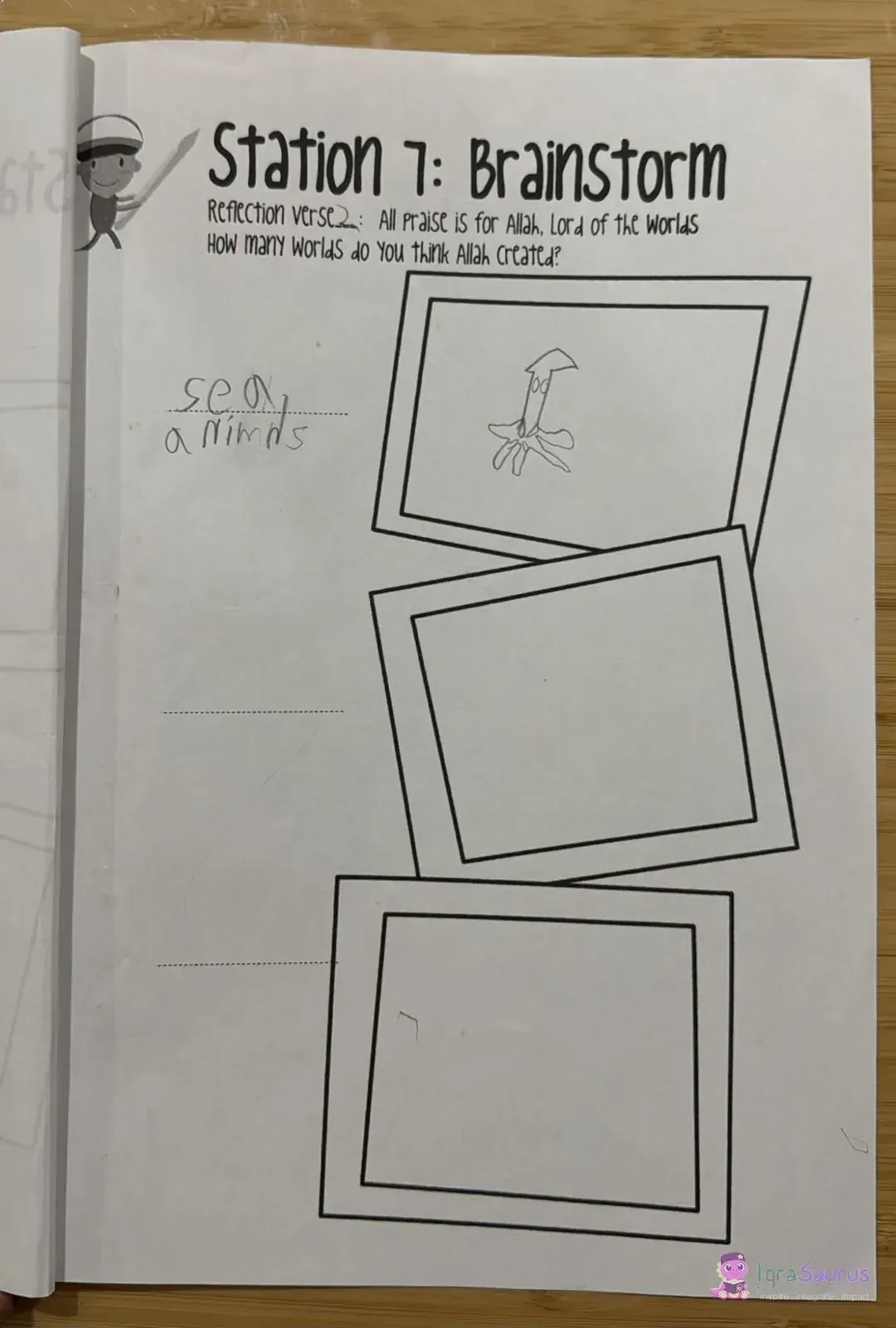
Station 7, Brainstorm, goes back to the second verse, the same verse as the yellow card full of sea creatures. Qoyis wrote "sea animals" and drew a squid.
The other stations are Station 1, Read and understand, and Station 5, Special Conversation, which sets out a hadith about Al-Fatihah as a chat on a phone screen. Later, the same stations fed into the Al-Fatihah lesson plan we drafted with our partner Little Caliphs. Their finished books are their own.